Relocation Checklist: Moving With Ease
Relocation has a way of compressing big decisions into a short window.
For many of our clients, relocation is not just about buying or selling property. It is pilots moving bases, doctors relocating for new hospitals or clinics, families juggling school terms, work commitments and timing, or professionals taking on locums, secondments or regional roles.
Finance, property and lifestyle decisions tend to collide all at once.
At the moment, we are also seeing a noticeable shift in how people are moving between homes. More clients are choosing to buy before they sell, often using bridging finance, sometimes referred to by banks as relocation finance. The appeal is not complexity or leverage. It is control, timing and certainty.
But regardless of how the finance is structured, there are a few practical considerations that consistently make relocation smoother when they are thought through early.
This is the checklist we keep coming back to.







The relocation checklist we use with clients
1. Talk to the locals
In regional towns especially, local knowledge matters.
Locals know where traffic backs up, which streets flood, where development is planned and what is quietly changing. Word of mouth often fills in the gaps that data cannot. It can influence suburb choice far more than online research alone.
2. Check flood and fire maps
Before falling in love with a street or a view, it is worth checking council flood and bushfire maps.
Some properties come with higher insurance premiums or restrictions that are not obvious during an inspection. Understanding these risks early helps avoid surprises later in the process.
3. Look for infrastructure
Infrastructure drives long term liveability and value.
Hospitals, schools, transport links and major upgrades can change an area quickly. Homes near major projects often benefit over time, particularly when construction is nearing completion rather than just announced.
4. Sort your finances early
Whether you are selling first, buying first or considering bridging finance, clarity matters.
Pre approval, understanding borrowing capacity and knowing your end position can significantly reduce stress. Clients who sort this early tend to make calmer decisions and avoid rushed compromises.
5. Rent, buy or invest
Relocation does not always mean buying immediately.
Some clients rent in their new location while investing elsewhere, especially when work arrangements are still settling or contracts are time limited. There is no single right answer. The best approach depends on lifestyle, income structure and future plans.
6. Put the right people in your corner
Relocation works best when the right advisers are involved early.
Accountants, conveyancers, buyers agents and brokers who understand your industry can make a real difference. This is particularly true for pilots, medical professionals and self employed clients whose income structures are not always standard.
Buying before selling: how clients are weighing it up

Many clients ask whether buying before selling is worth the additional cost.
For those choosing this path, bridging finance, sometimes called relocation finance by the banks, is often the structure used. It allows clients to secure their next home first, while only needing to demonstrate borrowing capacity on the final loan position once their existing property is sold.
The bridging portion is temporary and usually needs to be cleared within twelve months using sale proceeds. That part of the loan typically carries a higher interest rate.
But when clients talk through this decision, the focus is rarely just the rate.
It is about timing, certainty and reducing disruption.
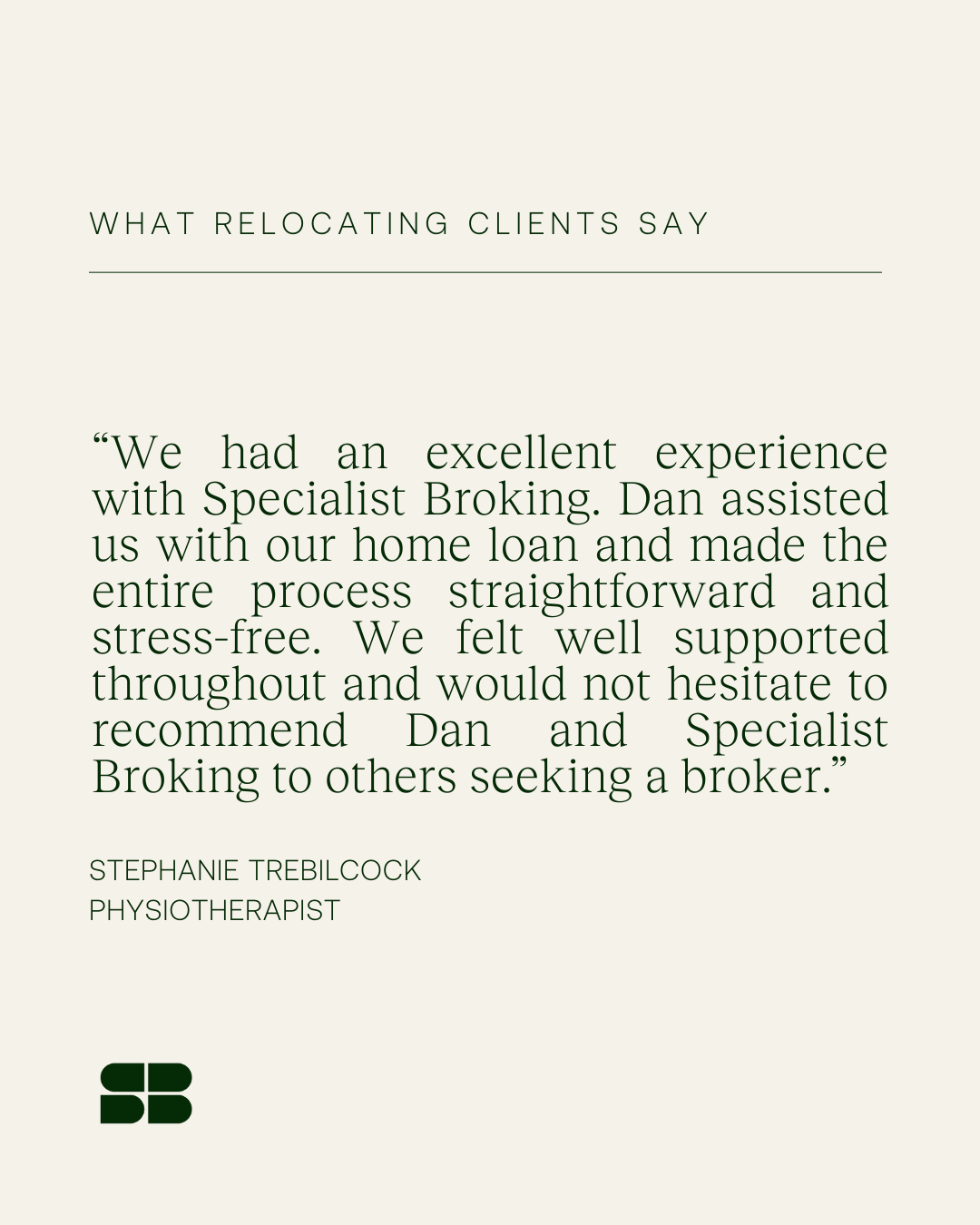
As one relocating client put it, the process felt “straightforward and stress free”, with the reassurance of being supported throughout and knowing the move was financially structured before anything else fell into place.
For others, especially pilots and medical professionals who relocate frequently, the value is in avoiding repeated moves or temporary living arrangements. One pilot client described relocating multiple times and finding that having the finance sorted upfront made buying or investing in a new area far easier, particularly when work locations changed quickly.
We also see this play out for families. Buying before selling can remove the pressure of selling on a deadline, moving twice, storing furniture or living in limbo between homes. For some, that certainty outweighs the short term premium. For others, selling first and keeping costs down still feels like the right call.
Both approaches can make sense when they are planned properly.
The key is understanding the trade offs early, and choosing a structure that fits your work, family and timing, rather than forcing everything into the cheapest option on paper.
Relocation is rarely simple, but it can be far more predictable with the right structure and conversations early.
If you are weighing up a move, or trying to understand how different finance strategies might support it, a short discussion can help clarify the options before decisions are locked in.